


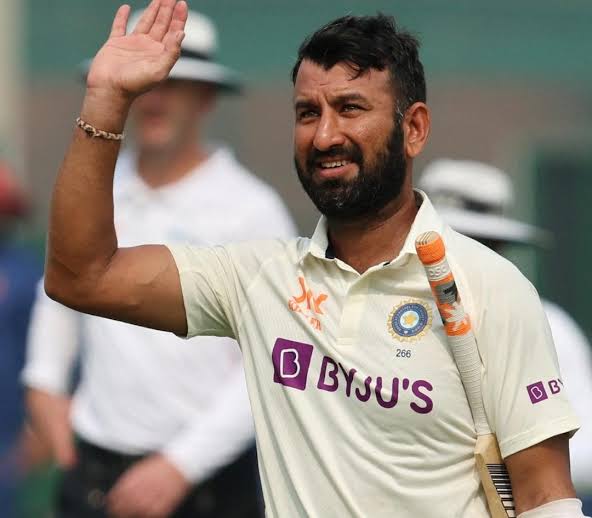
India’s most dependable No.3 in Test cricket, Cheteshwar Pujara, has announced his retirement from all forms of Indian cricket. Known for his rock-solid technique and ability to bat for long hours, Pujara was often referred to as the “Wall 2.0” of Indian cricket.
The 37-year-old made the announcement on social media, expressing gratitude for the opportunity to represent the nation: “Wearing the Indian jersey, singing the anthem, and giving my best on the field has been the greatest honour of my life. Every journey has an end, and with immense thankfulness, I have decided to retire from Indian cricket.”
📊 Career Highlights
Test Matches: 103
Runs: 7,195
Average: 43.60
Centuries: 19
Half-Centuries: 35
ODIs: 5
Defining Traits
Trusted as India’s anchor at No. 3 for over a decade.
Renowned for marathon batting sessions, grinding down opposition attacks.
Played a central role in India’s back-to-back series wins in Australia.
His three centuries in the 2018–19 Australia tour helped India script their first-ever Test series victory Down Under.
In the 2020–21 series, he absorbed countless blows from Australian pacers, yet stood tall with gritty knocks, most memorably his fighting 56 at Brisbane that set up India’s historic triumph.
Memorable Innings
2012: First Test century vs New Zealand in Hyderabad.
2013: 153 in Johannesburg, batting six hours against South Africa.
2017: Double century vs Australia in Ranchi after batting over 11 hours.
2018: Unbeaten 132 at Southampton on a seaming English pitch.
2021: Iconic resilience at the Gabba, where his courage defined India’s victory.
Beyond international cricket, Pujara was also a stalwart in domestic cricket for Saurashtra and played county cricket in England, scoring heavily for Sussex. With over 21,000 first-class runs and 66 centuries, he leaves behind a legacy of grit, patience, and determination.
End of an Era
With his retirement, Indian cricket bids farewell to one of its most resolute batters, a player who embodied discipline and courage. For over a decade, Pujara carried the weight of India’s batting in challenging overseas conditions and became a symbol of old-school Test match resilience in the modern game.

